Sunday, March 27, 2011

Raised Bed Garden Update

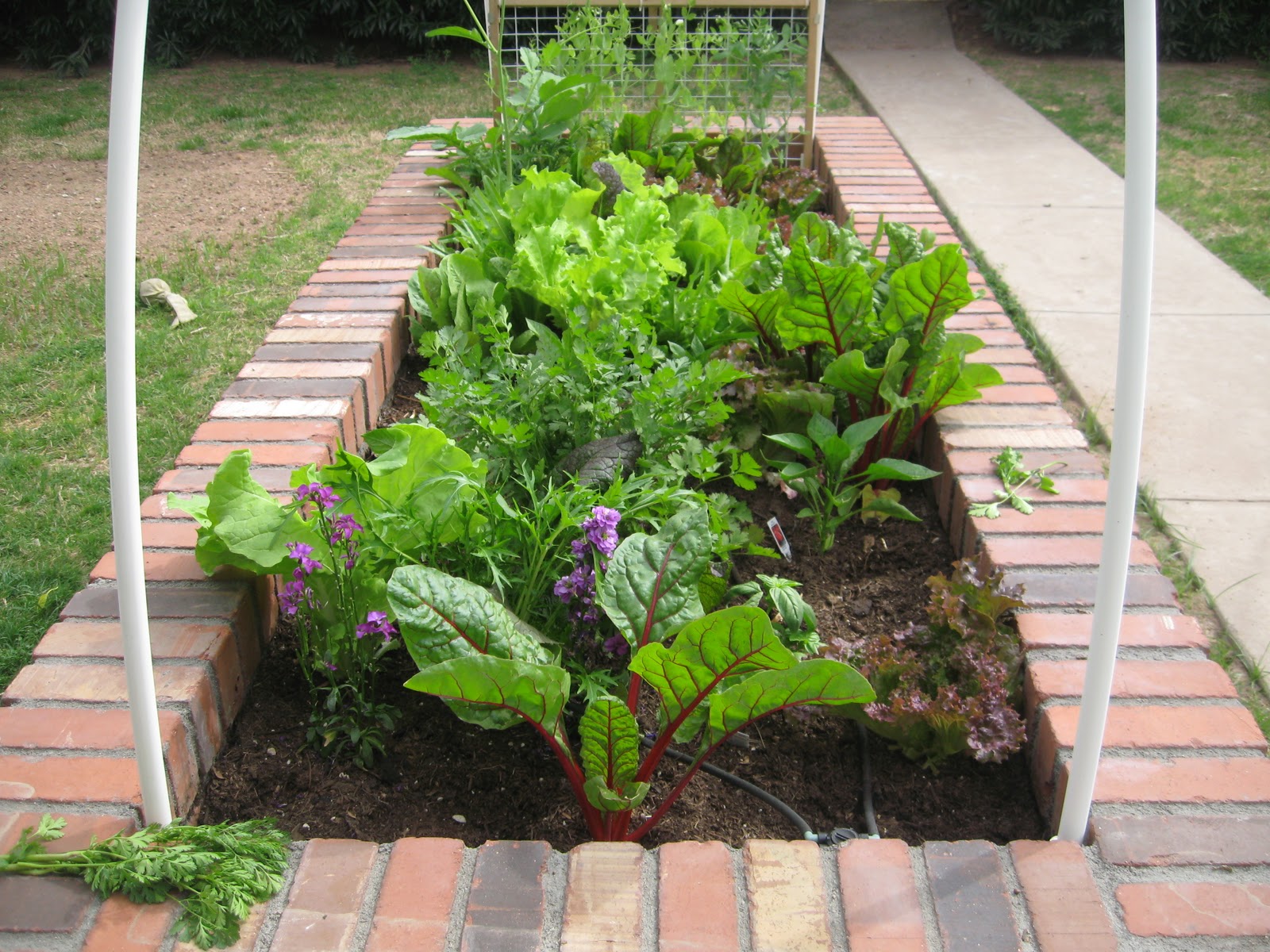
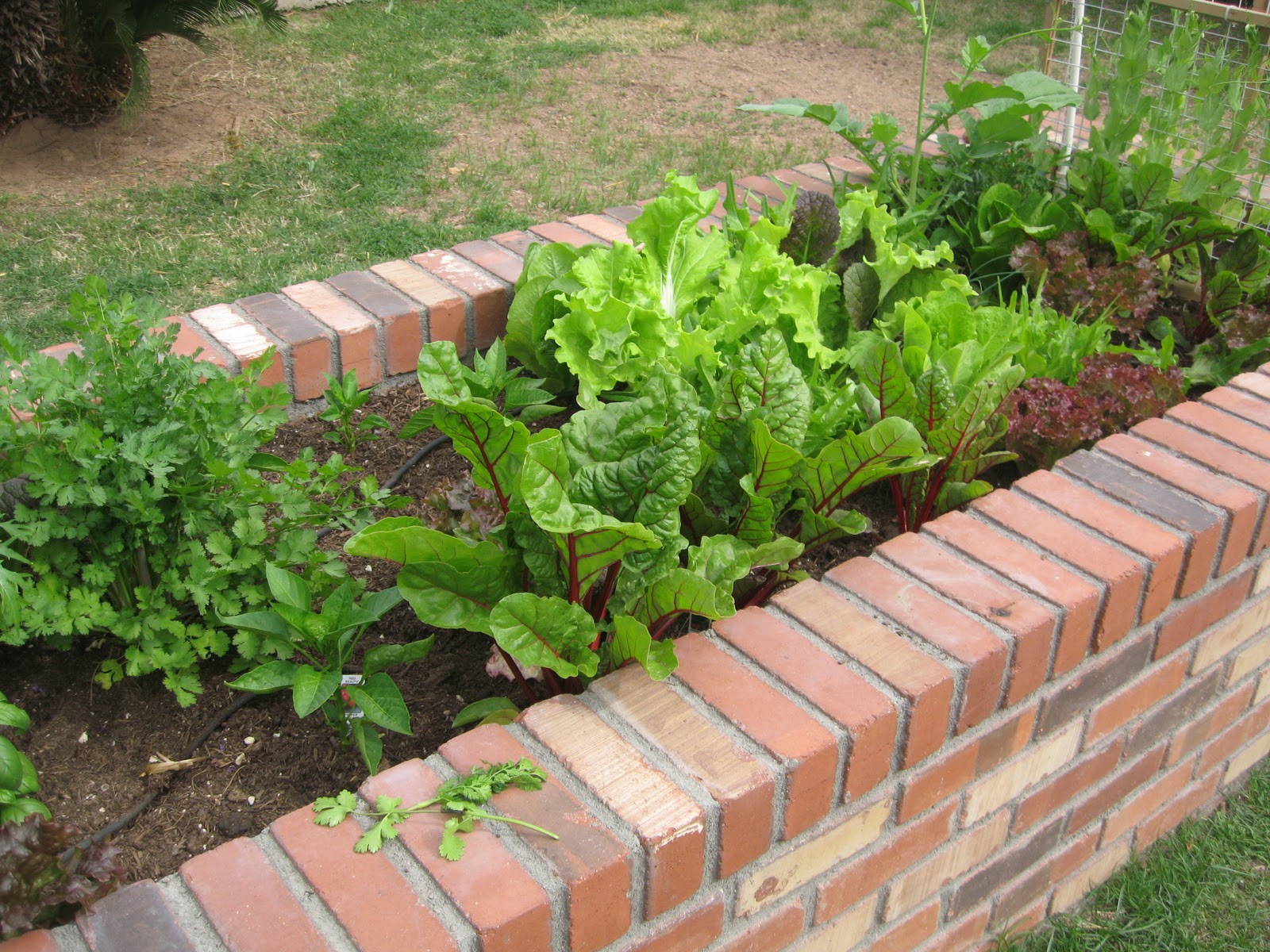
It's only been three weeks since we planted these raised bed garden boxes. I stopped by the other day to take a look. I thought you might like to see what I saw. Aren't they purty!

Saturday, March 5, 2011

Brick Raised Beds

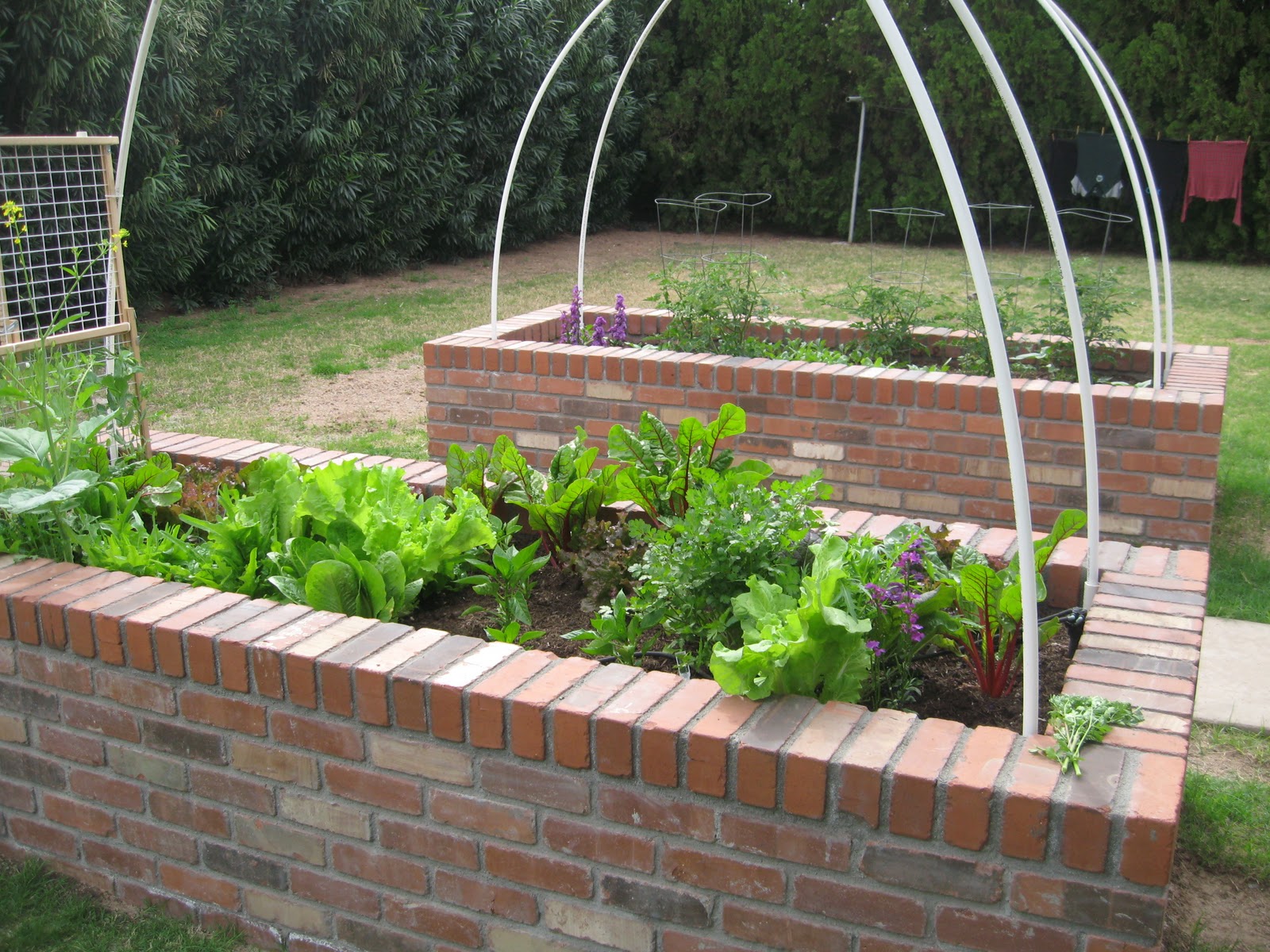
There's nothing like a new raised bed to get you off to a good start this spring. We just finished these beautiful brick raised beds for friend and local water store owner, (Water Connection), in time for the rain to bring a good soaking to the newly planted seeds. Denise's new garden site has plenty of sun and is located right outside her kitchen door for easy care and harvesting.

The beds are four by ten feet and two feet high, just the right height to sit comfortably and reach the center of the bed. We used old Phoenix brick to coordinate with the house and add to the character of the central Phoenix home. 
 The boxes or planters were nice and deep and we had lots of room with which to work. First we filled them with Baker Nursery top soil, and mixed in a little sand. Then, we layered a combination of leaves, manure, mulch, Singh Farm compost, straw, and a few bags of Patio Plus potting mix. Lastly, we added organic amendments; bone meal, blood meal, kelp and  humate.
A timer and drip line were installed. This all sounds quick and easy, but there was a lot of digging and shoveling and turning!
Of course, the fun part is choosing the seeds and transplants. Start small and plant what you will eat. Here's Daisy, the Water Connection Store dog and his owner, a happy, new gardener!

Wednesday, March 2, 2011

March Groundwork


There is nothing like a wet and wild spring to awaken your earthly instincts! The Spring rains have brightened everything in the garden and I don't know about you but, I cannot find one reason to stay inside on days like these.There are a few more days until the official first day of Spring arrives. For most people this day isn't particularly important, but as a gardener, it's a day in the year that always makes me pause and think about how significant this day would have been to our ancestors. If you had to totally rely on your knowledge of gardening to survive, you would celebrate this day too. This year the Spring Equinox arrives on March 20th at 7:21pm. That's when the sun is positioned directly over the equator, making the length of the day and the length of the night equal. From this day, the days gradually grow longer and warmer. Spring is here!

With a few seeds and some nice, loose, rich soil, there's no way you cannot expect abundance in the days ahead.

March to-do list~

  • Sow seeds for lima and green beans, black eyed peas, sweet corn, cucumbers, jicama, melons, squash, sunflowers, pumpkins, and sweet potatoes. Transplant artichokes, eggplants, tomatoes and peppers.
  • Prepare soil for spring planting. Add compost, mulch, well-rotted manure, or other organic matter and turn into soil.
  • Pull weeds before seeds form.
  • Watch for garden pests. For aphids try hosing plants with water, or use natural aphid spray. 1 Tbs. Dawn dish detergent, 1 Tbs. vegetable oil to 1 gallon of water. Add to a spray bottle. Spray top and underside of leaves in morning or late afternoon.
  • Feed roses a half a cup of Epsom salt and rose food, always water well.
  • Trim old, woody or dead wood from herbs. Transplant basil, chamomile, chives, lavender, lemon balm, lemon grass, oregano, sage, rosemary, and mints.
  • Sow seeds for poppy, marigold, hollyhocks, cosmos, sunflower and zinnias.
  • Continue to plant container roses, deciduous fruit and citrus trees. Add compost or mulch for extra nutients to tree wells and water deeply as trees leaf out.
  • Thin fruit on deciduous fruit trees (apples, pear apricot and peach) to 4 to 6 inches apart.
  • Now is the time to plant sweet potatoes, they are easy to grow but just make sure to provide lots of sun and space in your garden.

Thursday, February 3, 2011

February Groundwork

The month of February offers an opportunity to expand our home gardens and prepare for spring, (yes, these cold nights will pass). George Brookbank, one of my favorite desert gardening experts refers to February as the in-between month," It's the end of winter, but not quite spring." Do we continue to plant winter vegetables that will use our garden space or get a jump-start on summer planting? If you have enough space, you have the best of both worlds. If not, February is a great time to add a new garden box, or a halved wine barrel. Save your black plastic pots from your local nursery and use them for your new transplants until space opens up in your garden. At Love Apple Farm in California they use 15 gallon pots to plant their fingerling potatoes. This year my neighbor is planting his tomato and pepper seedlings in a bag of potting mix, and will move them to his garden when the soil warms up in a few weeks. Look around, you can grow your own food almost anywhere!

February Checklist
  • This is your last chance to sow cool-season vegetables before warm weather arrives. Plant carrots, beets, bok choy, green onions, leaf lettuce, peas, radishes, spinach, turnips and potatoes.
  • Begin to plant warm season vegetables. Beginning mid-February plant transplants of tomatoes, peppers and artichokes. The average "last-frost" date is around the middle of March. Be prepared to cover new transplants when a freeze is expected.
  • After mid-February, sow seeds of sweet corn, melons, cucumbers, summer squash, and sunflowers.
  • Prune roses and fruit trees.
  • Plant bare-root fruit trees and roses by mid-month.
  • Fertilize roses and established citrus trees.
  • Improve soil by adding 4 to 6 inches of a combination of compost, mulch and well-aged manure. You could also add some organic amendments including, bone meal, blood meal, alfalfa meal, and rock phosphate.
  • Pull spring weeds while soil is moist and roots are shallow.
  • Harvest citrus and winter vegetables.
  • Start an herb garden. Plant parsley, cilantro, oregano, chive, marjoram, rosemary, tarragon, thyme and mints.

Thursday, January 27, 2011

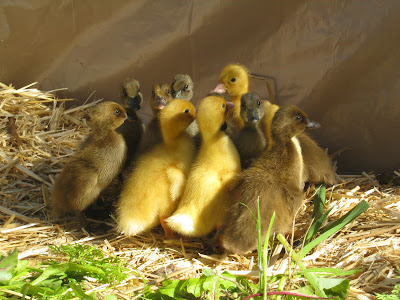
Make Way For Ducklings!

Your never know what's going on in your neighbors backyard. But, I have to say that I wasn't surprised when David, neighbor and fellow urban farmer decided to take on a new venture. Yes, down the street at Care-A-Lot Farm, there's lots of quacking going on. Take a look at these adorable little ducklings. 


It looks like they're deciding who's boss.


  Ramon, enjoying the ducklings.
I asked David to let us in on the why and the wherefore of duck raising. He was kind enough to be candid and honest about his experience thus far. I have to say that David has had years of experience working on organic farms and raising animals for meat, eggs and pleasure. All of the animals at his farm are treated with lots of care and respet,  just like the name implies. If you are interested in taking a closer look at his ducks, Care-A-Lot Farm will be one of the featured farms at the Spring Edible Garden Tour in April or early May

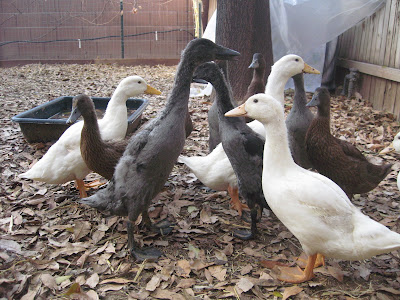
 Here's what David had to say, " So, why ducks? Why not? Back in November, we decided to venture into the art of duck rearing, mostly because I like variety but, also because they supposedly can lay the same number of eggs as a chicken. As an added benefit, ducks are much better at eating insects (primarily flies) and grasses. We placed our order for twelve ducks (3 males, 9 females), and one December day, they arrived (13 of them) via mail. After some research, we picked the best top three laying varieties. Peking, Indian Runner and Khaki Campbell ducklings. The ducks are growing very fast. You feed them the same food that you would a chick/chicken and within three weeks, they no longer need protection from the elements. Ducks LOVE water. I thought it was an overstatement when people told me, but given the choice between breathing and swimming, I am convinced they would swim. At six weeks, we integrated them with my chickens, there were no issues. I was worried that the ducks would be at the bottom of the totem pole and perhaps starve, but I was wrong. They can eat ten times faster than the chickens ... so now I must be careful that they don't eat all of the food. My ducks should start laying eggs at about six months, similar to chickens. They stick together and go EVERYWHERE together. I didn't think ducks were supposed to be loud, but if they don't get their food in the morning, they QUACK and QUACK! Luckily, food shuts them up. It's too early to say whether or not I am glad I got ducks. They are definitely adorable and add dimension to the farm. Will they lay the same number of eggs as a chicken? Can I convince the public that duck eggs are just as tasty as chicken eggs? Will my neighbors complain? Well, I guess I will have to wait and see ... "
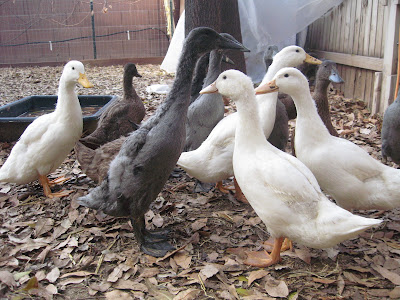
  

A few weeks later. . . my how they've grown!


DUCK EGGS. Coming to a neighborhood near you!


 More on raising ducks
here.

Thursday, January 6, 2011

Born in Arabia, Bred in Arcadia


One of the first groves ever planted in the Arcadia area was the Black Sphinx date palm in or around 1917. The pups were brought from Arabia and planted just South of Lafayette between 46th and 47th Place. The grove still stands today with 400+ trees. In 1954 the area was subdivided and houses were carefully built amongst the trees to minimize tree removal. Neighbors who live here liken the area to a rain-forest canopy.
Several years ago, with guidance from a long-time “datilero”, Harry Polk, I started harvesting the dates from the trees in my yard as well as those of my next-door neighbors. If you would like stop by my house at 4641 E. Calle Redonda (602-840-0622), I have dates available for $7 per 1-pound box.
The plump moist fruit, almost jet black in color, has a delicate flavor and creamy texture. They are delicious right out of the box, or stuffed with blue cheese, goat cheese, chocolates or nuts; they are also wonderful in salads or as a glaze for chicken.
One of my favorite recipes is for Moroccan Chicken and Date Tangine from Food.com
http://www.food.com/recipe/moroccan-chicken-and-date-tagine-44107

Pollination Time

Bagging Time

Delicious Black Sphinx Dates


Monday, January 3, 2011

January is here and it's not a time for slackers. It's time to prepare for Spring! January is the month to prune, plant, and dig holes. This is the time to think about expanding your garden. But, don't think too long. The dormant bare-root trees need to be planted before the roots dry out and the warm sun stimulates the buds to leaf out.

Here's the list for the month
  • Plant deciduous fruit trees. If you are planting bare-root trees, get them in the ground as soon as possible. Don't let the roots dry out. Take the tree out of the bag and set it in a barrel of water with a little vitamin B. Let it soak overnight. Have your holes pre-dug and soil mixture ready. Here is a list of fruit and nut trees for the low desert. Many nurseries have potted fruit trees available. You can plant these any time in the next few weeks.
  • Start taste testing citrus fruits for sweetness. Navel, sweet oranges, mandarins and tangelos are close to harvest time.
  • Continue to sow seeds or transplants of cool-season vegetables for a continuous supply of salad greens and root vegetables until warm weather arrives.
  • Time to plant bare-root roses. Find a location where roses have filtered afternoon shade. Valley nurseries have hundreds of roses available. Rose societies will be offering how-to clinics for pruning and planting. Take advantage of the expert knowledge of the valley rosarians. Check out the Maricopa County Extension's rose publication for more information.
  • Prune established roses to encourage optimum blooming in April. Cut all canes back to approximately one half. Cut canes back to an outward facing bud. Remove dead canes. Remove old or weak canes. Strip off all leaves and dispose of them. Seal all cuts with Elmer's glue to seal new cuts. Don't be afraid. Practice makes perfect.
  • Sow seeds of tomatoes, peppers eggplants and basil indoors in time to transplant in the garden in late February to early March.
  • Continue to watch for freezing temperatures and protect frost-tender plants. The last average frost date is around February 15th.
  • Watch for gray aphids on tender new growth and hose off regularly with a forceful spray of water. Also, looper-worms like to eat cabbage, broccoli and cauliflower. Check under leaves and near the base and pick off worms.
  • This is a great time to add color and texture to your garden. Plant cool weather annuals between your vegetables. Calendulas, johnny-jump-ups, pansy, petunias, snapdragons and stocks will continue to bloom until spring. Cool-season herbs include, dill, parsley, cilantro and thyme.
  • Prune deciduous fruit trees by the end of January or before flowering starts.
  • If you are an adventurous gardener, plant asparagus now.


Have a great new year, and enjoy spring gardening in the desert!

Sunday, December 12, 2010

December Groundwork

Sorry to be so late, we have been busy with the our garden tour and we just had to take a few days off. Here we are again, almost at years end, except for a few frosty nights and some frost bitten tomatoes, the December weather has been perfect. Here's a quick run down of the schedule for this months garden activities.
  • Have frost cloth ready in case of a predicted freeze for frost sensitive plants. Use frost cloth or old sheets (we double our layers and keep our fingers crossed!) to cover tomatoes and peppers. If possible, cover all the way to the ground to keep warmth in. Wait until the later part of February to trim any affected frost damage.Winter vegetables will usually survive the frosts. Watch your local weather reports. The last frost date is usually March 15th.
  • Citrus trees begin to ripen, be ready to harvest sweet, juicy, lemons, oranges and grapefruit.
  • Continue to sow or transplant cool weather vegetables. Root crops, lettuces and members of the cabbage family can be planted until early spring. Favorite salad ingredients can continue to produce until the temperatures heat up in late spring.
  • Examine your crops for pests, look under leaves and around the base of the plant for looper-worms, especially on your cole crops. Hand pick if possible. If the little green caterpillars get out of hand, most nurseries recommend B.T. as an organic control. If birds are a problem, place netting over garden area.
  • Local nurseries will begin to stock bare-root plants (roses and fruit trees) at the end of December. Plan and prepare a nice sunny location for planting next month.  Pre-dig your hole and add a little mulch, compost and gypsum or sand. Fill the hole with water to soften the soil in preparation for the new tree roots. Research your southwest desert varieties. Choose varieties that require no more than 250 chilling hours.
  • If you like tomatoes and peppers, try some heirloom varieties from seed this year. Plant seeds to produce your own transplants for spring planting. Sow seeds indoors around the end of the month. Choose varieties that will do well in our desert climate. (nativeseeds.org). Transplants should be ready to plant outside from mid-Feb to mid-March.
  • Feed vegetables a good, well balanced fertilizer every couple of weeks. Don't over fertilize herbs if they look healthy and green.
  • Start collecting fall leaves for composting. We usually mow ours up and catch them in a bag. They are small and ready to go in the compost pile. Don't forget to ask your neighbor for their leaves, they keep well in bags for many months. Layer leaves with the summer's bagged lawn clippings, and other organic material for fast decomposition. Spray with a little water and let it rot!
  • Prepare beds for spring planting. If you have a new area that you'll be planting, layer 4 or 5 inches of manure and let it rest for awhile. In a few weeks, you can add compost and amendments and work that in. Don't work the soil when it's wet.
  • Deadhead spent flowers. Roses, especially will give you beautiful blooms this month. Prepare for pruning next month when you will be striping all leaves and blooms off the canes.
  • Gather seed catalogs, choose and order seeds for spring sowing.
That's it, it's time to take a break and enjoy time with friends and family.  Have a great holiday season, we'll get back together in the new year!
HAPPY HOLIDAYS!